Where bladder meets daily life
Your bladder does not live in a lab. It lives in your day.
Urgency, night-time waking, or an irritated feeling rarely appear out of nowhere. Sleep, drinking, coffee, stress, and gut often play along, and only make sense in context.
Why context matters
The same two cups of coffee, two completely different days.
The bladder is a sensitive organ. It reacts to fluid intake, sleep, tension, medication, and habits. Complaints can have medical causes, but daily life often amplifies them or makes them visible in the first place.
That is exactly why a single moment rarely says enough. Only context turns observation into knowledge.
A small story
Two men drink the same amount of coffee. One feels nothing. The other has to go three times after.
The difference is not just the coffee. It is the interplay of bladder, nervous system, sleep, drinking habits, and routine.
Daily-life radar
Tap what shapes your day.
Eight areas that are in conversation with the bladder. Each note is knowledge, not homework.
Coffee & alcohol
Amplifiers, not diagnoses.
Caffeine can make the bladder more audible in some people; alcohol increases urine production and disturbs sleep. The deciding factor is not the cup, it is whether urgency, frequency, or irritation actually rise afterwards.
Three connections
What rarely gets said this clearly.
Three urological bridges that turn puzzling into explainable in daily life.
Nocturia
Waking at night is not simply age.
Getting up once or twice a night is rarely a pure bladder issue. Late-evening fluids, sleep quality, cardiovascular load, medication, or shifted nightly kidney hormones can join in. The question is: how often, since when, in what context?
Not every nightly visit has the same cause.
Nervous system
Stress does not make symptoms imagined.
Tension acts directly on pelvic floor and perception. People worried about urgency scan their body more often and plan bathrooms ahead. Both shift the experience. That is not weakness; it is a real loop between head and bladder.
It means nervous system and bladder are in conversation.
Gut & pelvic floor
Sometimes the clue sits in the pelvis, not in the bladder.
Constipation raises pressure. A chronically tight pelvic floor shifts voiding and urgency. Gut, bladder, and pelvic floor sit so close functionally that bladder complaints often only make sense through the pelvis.
The pelvis is a trio: gut, bladder, pelvic floor.
What many think vs. urologically more interesting
Four sentences almost everyone has thought before.
None of these is wrong. They are just the short version. The longer one is worth it.
What many think
I go often, so I drink too much.
Urologically more interesting
When does it happen, how strong is the urge, and how much actually comes? Frequency without volume tells a very different story than frequency with volume.
What many think
Waking at night is just age.
Urologically more interesting
How often, since when, with which evening fluid intake, with which sleep quality, and is there an upward trend? Age is context, not diagnosis.
What many think
Burning always means infection.
Urologically more interesting
Burning can fit infection, but also irritation, mucosa, stones, or medication. What else is happening at the same time matters at least as much.
What many think
When it is better for a while, it is gone.
Urologically more interesting
Fluctuating symptoms can still form a pattern. Especially shifting courses are worth looking at in a structured way.
Make context visible
Streamcheck connects measurements with the daily life they come from.
Streamcheck does not replace a diagnosis. It helps you observe urological signals and daily influences in a more structured way.
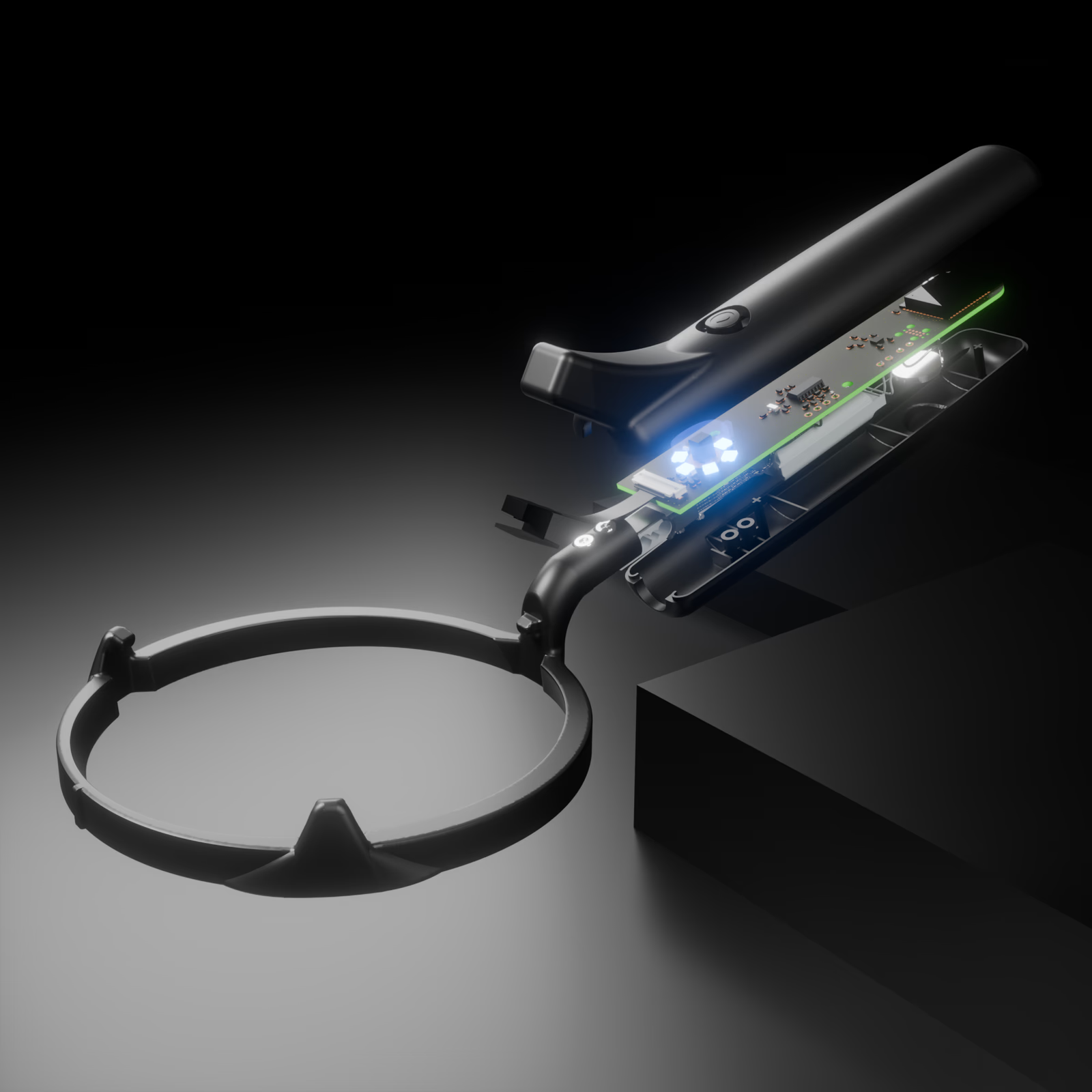
Streamcheck system
Measure while daily life happens.
A certified medical device engineered in Germany. Measures uroflow and biomarkers at home and makes course, triggers, and doctor conversations easier to grasp.
- Capture daily influences like drinking, night, and urgency in a structured way.
- Recognize changes over days and weeks instead of single moments.
- Prepare medical conversations with more concrete data.
Keep exploring
You do not have to stop here.
Pick where to go next.