Watch or get checked?
Not every symptom is an emergency. But every pattern deserves attention.
With urological complaints, the key question is rarely how bad it is right now. It is: since when, how often, with which warning signs, and how much it influences your day.
The uncertainty is normal
Between not wanting to overreact and googling yourself into panic lies the sensible path.
Understand which signals really count and which questions make the next decision easier.
Urological complaints are rarely comfortable to talk about. That is why they are often pushed aside for too long or searched online too fast. Both reactions are human. A calm decision logic helps more: four questions that almost always move you forward.
Warning signs beat gut feeling
Some signals do not belong in self-observation. They belong in timely medical hands.
Change matters
A single day says little. Frequency, strength, and direction over weeks tell more.
Daily life is medically relevant
Sleep, plans, sport, intimacy, or social moments are not side issues when symptoms change them.
The four decision questions
Four questions that sort almost any urological uncertainty.
Open a card to read each question step by step.
Some signals are shortcuts in decision-making. They are not worth self-interpreting.
- Visibly altered urine color
- Fever along with complaints
- Severe pain or flank pain
- Acute trouble urinating
- Visible or rapid worsening
Urological insight
Warning signs are not there to scare you. They are clear reasons for a medical look.
A change over time often says more than a single symptom.
- Complaints get more frequent
- Night-time urination increases
- Stream becomes weaker
- Urgency gets harder to control
- New pain or burning appears
Urological insight
What changes tells more than what shows up just once.
Quality of life is medically relevant. Complaints do not have to feel dangerous to matter.
- Sleep gets worse
- Plans get organized around bathrooms
- Sport, intimacy, or social moments get avoided
- Uncertainty or shame grow
Urological insight
What shapes your day is worth taking seriously.
Some people go more often than others. What matters is the change against your own baseline.
- Comparison with your past weeks or months
- Age explains changes, but does not make them harmless
- Consider new habits or life situations
Urological insight
Your own normal is the most honest baseline. No one knows it better than you do.
Observe · Place · Clarify
Three zones that make your next step easier.
Not a diagnosis algorithm, but an orientation you can lean on.
Green
Observe and place
- Mild complaints
- A clear trigger is visible
- No warning signs
- No worsening
- Daily life barely affected
Observing makes sense when it happens consciously and changes do not get lost.
Yellow
Take a closer look
- Complaints keep coming back
- A pattern becomes clearer
- Sleep or routines suffer
- Several symptoms appear together
- Uncertainty stays
It is not about panic. It is about structure. The clearer the course, the better the next decision.
Red
See a doctor
- Visible blood in urine
- Fever along with complaints
- Severe pain or flank pain
- Acute trouble urinating
- Marked worsening
These signals belong in a timely medical assessment, not tomorrow and not next week.
Decision compass
Tap what applies to you.
No diagnosis, no triage. Just the logic of this page, summarized for you.
Tap at least one statement above. Your orientation appears here.
Do not wait for the obvious moment
Five thoughts many people have and a more useful frame.
None of these thoughts is wrong. They are just the fast version. A closer reading helps more.
Quick thought
It does not really hurt, so it does not matter.
Better framing
Complaints without strong pain can still matter, especially if they keep returning or shifting.
Quick thought
Waking at night is just normal.
Better framing
What matters is whether it is new, getting more frequent, or visibly stressing your sleep and day.
Quick thought
There was only one odd thing in my urine, once.
Better framing
A one-off signal, for example a clearly altered urine color, should still get a medical look.
Quick thought
I do not want to overreact.
Better framing
Getting it checked is not drama. It is clarification. Often the result is reassurance.
Quick thought
When it is better for a while, it is gone.
Better framing
Fluctuating complaints can still form a pattern. Courses are worth tracking in a structured way.
From uncertainty to course
Streamcheck makes change visible before memory gets fuzzy.
Streamcheck does not replace a diagnosis. It helps you observe urological signals in a structured way and prepare conversations more concretely.
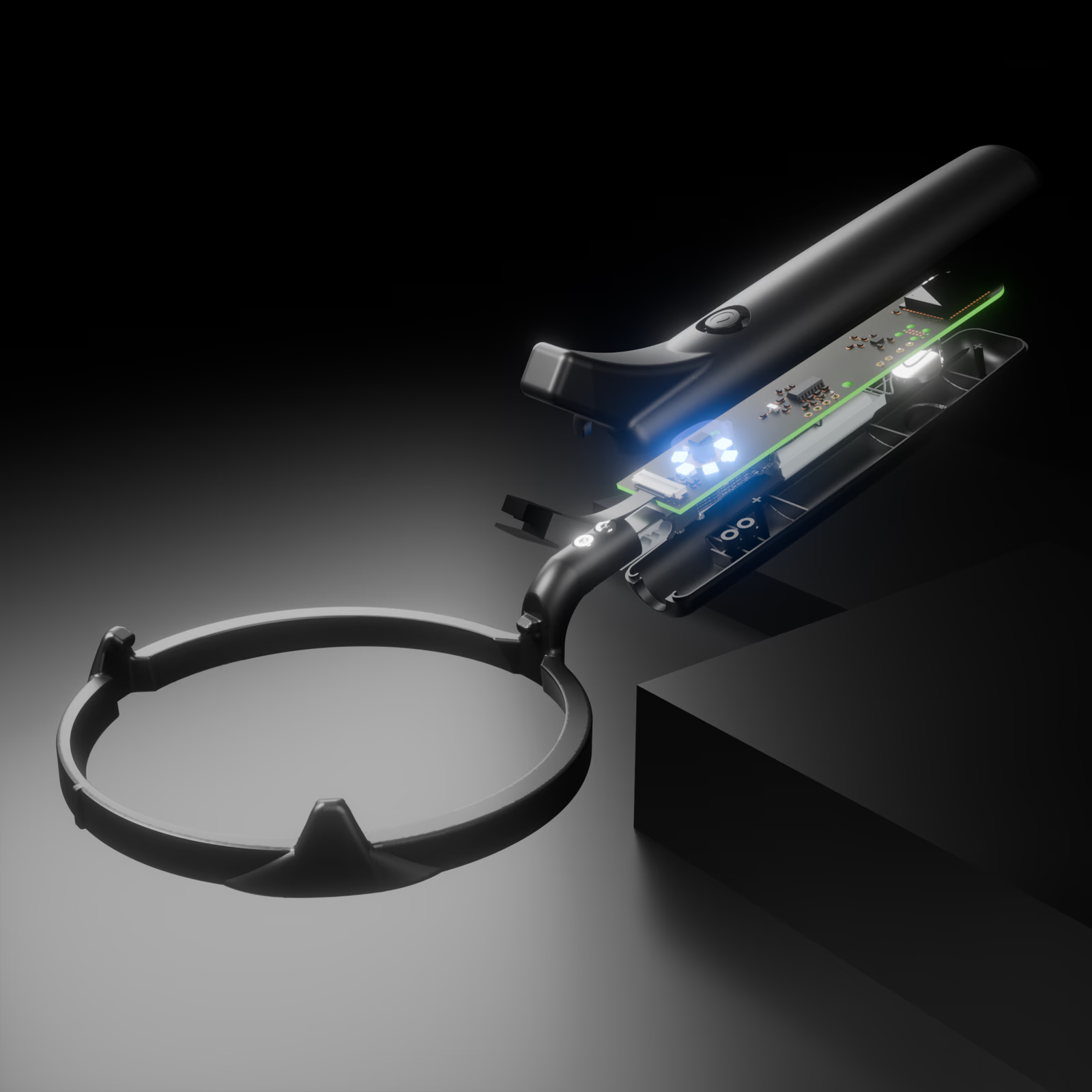
Streamcheck system
Measure instead of guessing.
A certified medical device engineered in Germany. Measures uroflow and biomarkers at home and turns single impressions into a course.
- Place complaints with clear decision questions.
- Document change over days and weeks.
- Make your doctor's visit more concrete with data instead of memory.
Keep exploring
You do not have to stop here.
Pick where to go next.